

Blogs
Heat Exchanger Chemical Cleaning: When Is It Necessary?
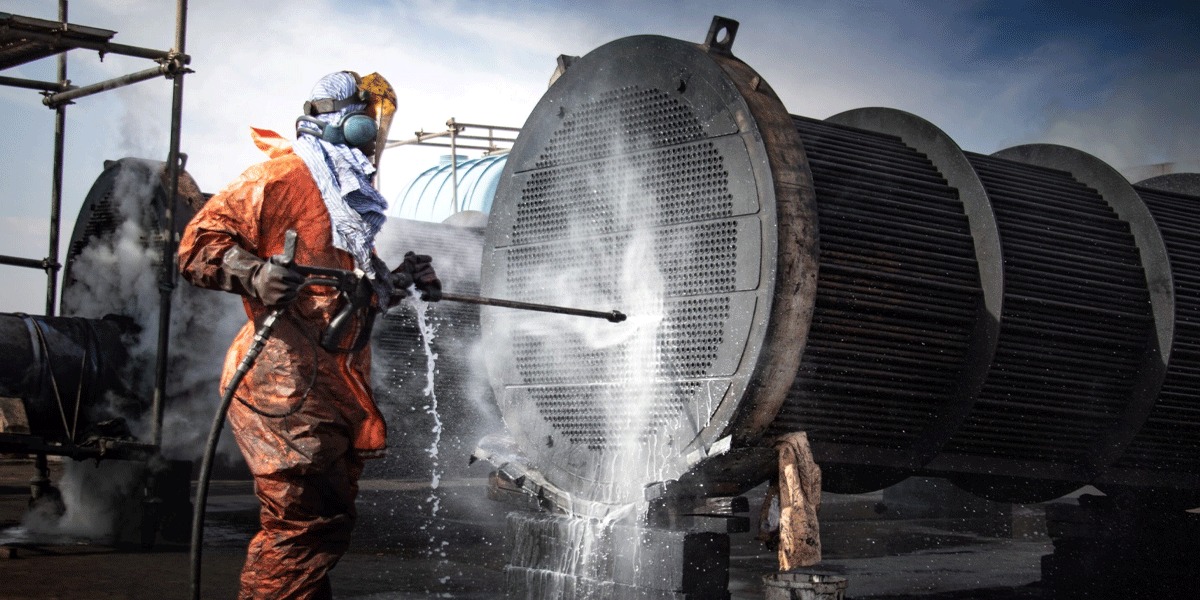
Is your heat exchanger consuming more energy but failing to achieve the required outlet temperature? This problem occurs when unwanted material accumulates on heat transfer surfaces. Depending on the process, deposits may include mineral scale, corrosion products, oil, grease, hydrocarbons, biological matter, suspended solids, or process residues. As these deposits become thicker, they create additional thermal resistance between the hot and cold fluids. Your heat exchanger continues to operate, but its thermal efficiency and flow decrease, and operating costs increase.
The best way to deal with the problem is to get your heat exchanger professionally cleaned. Heat exchanger chemical cleaning removes chemically soluble or dispersible deposits, but it should be selected only after assessing the fouling type, exchanger construction, operating conditions, and cleaning requirements.
What Are the Main Signs That Cleaning Is Necessary?
Increasing Pressure Drop
Pressure drop is one of the most valuable operating parameters indicating fouling. Deposits restrict the passage of the fluid, causing a decrease in flow area and growing hydraulic resistance.
If pressure drop in the heat exchanger rises while the same flow parameters are observed, fouling or blockage should be examined. The real value of pressure to clean should be set according to the equipment capabilities and experience.
Declining Heat Transfer Performance
An exchanger that is fouled may need higher amounts of energy to reach the same processing temperature. The difficulty of controlling the outlet temperature will also be observed.
Engineers can compare actual heat duty, inlet and outlet temperatures, flow rates, among other operating conditions, against design values. In some cases, variations in the overall heat transfer coefficient will help quantify decreased effectiveness.
Reduced Flow Rate
Deposits can partially block tubes, channels, plates, or other flow passages. If flow decreases despite comparable pumping conditions, internal fouling should be investigated.
Increasing Energy Consumption
If the efficiency of a heat exchanger decreases, there might be a need for more energy in the whole process to keep production going. The solution to the problem could be cleaning.
What Types of Fouling Can Chemical Cleaning Remove?
The cleaning method must match the deposit.
Mineral scale can include deposits such as calcium carbonate and other inorganic compounds. Suitable acidic formulations may dissolve certain mineral deposits.
Oil, grease, and hydrocarbon residues may require alkaline or solvent-based chemistry depending on their composition and the equipment materials.
Corrosion products such as iron oxides may require specialised chemical formulations.
Biological deposits can include microorganisms, algae, and associated organic matter. Cleaning may require chemical treatment appropriate to the specific contamination.
Sediment and loose particulate matter may sometimes respond better to flushing, water jetting, or mechanical cleaning than to chemical treatment.
Chemical cleaning should therefore never be selected simply because the exchanger is dirty. The deposit should be identified as accurately as practical before the cleaning chemistry is chosen.
When Is Chemical Cleaning Preferable to Mechanical Cleaning?
Mechanical cleaning can be effective when deposits are physically removable or when access allows tubes, plates, or passages to be cleaned directly. It may involve brushing, water jetting, or other mechanical methods.
Chemical cleaning becomes particularly useful when deposits are firmly adhered to heat transfer surfaces or when their composition allows them to be dissolved or dispersed chemically.
For suitable equipment, Cleaning-in-Place (CIP) can allow cleaning chemicals to circulate through the exchanger without complete dismantling. This can reduce maintenance intervention and downtime.
However, CIP is not automatically appropriate for every exchanger. Severe blockage may prevent adequate chemical circulation, while chemically resistant deposits may require mechanical intervention.
How Is Heat Exchanger Chemical Cleaning Performed?
A typical chemical cleaning operation usually starts with the pre-cleaning evaluation stage. Engineers analyse the operational history, understand the structure of the heat exchanger and predict the fouling mechanism.
Then, the equipment is isolated and drained and ready for cleaning. Pre-flushing could also be done to clean off loose deposits before the actual chemical circulation starts.
Next is the circulation of the chosen cleaning fluid in the relevant circuit under certain conditions. Some of the critical conditions here include: concentration of chemicals, temperature of the solution, rate of circulation, contact time, pH, pressure, and return solution.
Monitoring such conditions helps ensure that the cleaning operation remains within the specified operating range. Finally, after the chemical cleaning, flushing of the equipment with a proper rinse fluid takes place.
The Importance of Chemical Compatibility
Selecting the wrong chemical can cause harm to the heat exchanger rather than rejuvenating it. Cleaning chemistry needs to be compatible with all the materials used in the construction of the exchanger, such as tubes, plates, welds, gaskets, seals, coatings, and any other material that comes in contact with water. These materials include stainless steel, carbon steel, copper alloy, titanium, elastomers, and many more.
The use of chlorine-containing or highly aggressive chemicals can lead to problems with corrosion of some of the susceptible materials. The concentration and temperature of the chemical can also impact the corrosion rate.
Therefore, the cleaning process needs to be performed according to the guidelines provided by the equipment manufacturer.
How Frequently should a Heat Exchanger be Chemically Cleaned?
There is no universal guideline for how frequently any heat exchanger should be cleaned.
Cleaning intervals depend on the nature of the process fluid, water chemistry, temperature, flow rate, heat exchanger configuration, fouling propensity, operational parameters, and history of previous cleaning.
Condition-based maintenance is often a better approach than cleaning according to a fixed schedule.
Early cleaning may also be crucial. If there are sufficient deposits that limit the ability to circulate chemicals, cleaning may become progressively harder and mechanical cleaning may eventually be needed.
Choosing Professional Heat Exchanger Chemical Cleaning in the UAE
Industrial facilities should treat chemical cleaning as an engineered maintenance activity rather than simply introducing a cleaning chemical into the system. Proper assessment of the fouling, equipment metallurgy, chemical compatibility, circulation conditions, safety requirements, and waste handling is essential.
If you are looking for Heat Exchanger Chemical Cleaning UAE, choose a specialist that can assess the exchanger condition, identify the likely fouling mechanism, select compatible cleaning chemistry, control the cleaning process, and verify performance after treatment.